
Coldwater, Warmwater, Fly Casting & Tenkara Blog
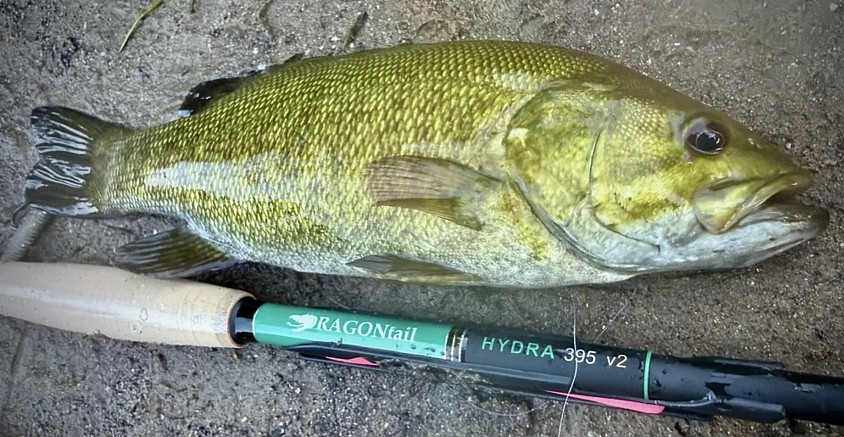
Smallmouth Bass / DRAGONtail Tenkara Hydra v2 rod
Huh? ... What the heck is Tenkara?
Tenkara Fundamentals
An Introductory Guide for Fly Anglers New to Tenkara
What Is Tenkara, and Why Is It Different?
Tenkara is a centuries-old Japanese method of fly fishing that strips the sport down to its essentials: a long, telescoping rod, a fixed length of line tied directly to the rod tip, and a fly. There is no reel.
This is the biggest conceptual shift for anglers coming from the Traditional Method of fly fishing.
Loved for it's simplicity whether fly fishing for freshwater trout or warmwater bass. Perfect to just throw in the back of your car for a quick fly fishing foray on your way home from work -- to fish a local bass pond; or, a short weekend trip to the mountains -- with opportunities to fly fish for trout.
Traditional Fly Fishing vs. Tenkara
Traditional: Rod + reel + fly line + leader + tippet. $$$$
Tenkara: Rod + fixed line + tippet (no reel). $
*********
Traditional: Line weight loads the rod for distance casts
Tenkara: Rod's own flex loads the cast; line is nearly weightless
*********
Traditional: Retrieve fish by reeling in or stripping line
Tenkara: Retrieve fish by raising the rod and hand-lining
*********
Traditional: Designed for varied distances, big water, streamers, nymph rigs
Tenkara: Designed for close-range precision on small-to-medium water
*********
Traditional: Multiple fly patterns matched to specific insects
Tenkara: Traditionally one or few “generalist” fly patterns fished with technique, not imitation.
*********
Because there's no reel and no heavy fly line to manage, Tenkara removes a lot of the gear-handling burden. Your line stays off the water almost entirely, which means less drag on your fly and extremely precise, delicate presentations — a huge advantage on the small, brushy, technical streams common throughout the Rocky Mountains, Northeast, Appalachians, and the Pacific Northwest. The tradeoff is limited range: Tenkara is a close-quarters game, typically effective out to about 25–30 feet. Most trout and river bass are caught within 30 feet of the angler.
Rod Selection Criteria
Tenkara rods are extendible (they collapse down small enough to fit into a short tube) and are chosen based on a few key specs:
1. Length
Rods commonly run 10–13 feet, sometimes longer.
- 10.5–11.5 ft — brushy, tight streams with overhanging cover; easiest for beginners to control
- 12–13 ft — more open water, added reach for drifts and holding line off currents
- Longer rods generally give you more line control at the cost of maneuverability in tight brush.
2. Flex Pattern (Action)
Described by a ratio like 5:5, 6:4, or 7:3 (tip:butt flex).
- 5:5 (soft/parabolic) — flexes through the whole rod; forgiving, great for beginners, protects light tippet, excels at delicate presentations
- 6:4 — moderate, versatile all-around action
- 7:3 or 8:2 (stiffer, tip-flex) — more power for bigger fish or windier conditions, less forgiving to cast
3. Line Weight Rating
Most rods are rated for a range of line sizes (e.g., level line #3–4). Beginners should stay near the middle of the recommended range.
4. Collapsed Length & Weight
Matters for backpacking or hike-in fishing — look for compact closed lengths (16–20 inches) if you're covering trail miles.
5. Intended Water
- Small, tight mountain streams → shorter, softer rod
- Mid-size rivers or stillwater → longer, slightly stiffer rod
For a first rod, most instructors recommend an 11–12 ft, 6:4 action rod — a versatile, forgiving starting point that handles the majority of U.S. freestone streams well. Multi-Zoom rods are also highly recommended (multiple rods in one).
Flies Used in Tenkara: Kebari
Traditional Tenkara flies are called kebari (毛鉤, “hair hook”). They are typically soft-hackle, reverse-hackle wet flies fished actively rather than imitated to match a specific insect.
- Sakasa Kebari — the classic pattern, with hackle swept forward toward the eye. Designed to pulse and breathe when the fly is manipulated in the water.
- Traditional wet flies and soft hackles — work very well with Tenkara technique (Partridge and Orange, soft-hackle Pheasant Tails, etc.)
- Dry flies — commonly used on U.S. Tenkara water, especially in the “Tenkara dry-dropper” style
- Nymphs — fished under a strike indicator or straight-line, especially effective for the up-and-across dead-drift approach
- Small streamers/wet flies — for stillwater and searching bigger holding water
American Tenkara anglers frequently break from strict Japanese minimalism, carrying a range of these patterns just as a Western fly angler would. But the core Tenkara philosophy is: fewer patterns, more skillful presentation. Many experienced Tenkara anglers fish one or two searching patterns all season and let technique — not fly selection — do the work.
Setting Up Your Tenkara Rod
- Extend the rod gently, section by section, from the butt (handle) toward the tip — never yank the tip section out forcefully, and never extend by shaking the closed rod.
- The Lillian — the small braided cord at the rod tip. Tie your line to it using a girth hitch (larks-head knot), which is the standard Tenkara connection. Be sure to tie a small overhand knot to the Lillian and secure the Girth Hitch behind it. Pass the Lillian two times through the Girth Hitch.
- Attach your line. Two main options:
- Level line — a single-diameter fluorocarbon or nylon line, very light, casts delicately, best in wind-sheltered spots
- Furled/tapered line — braided or tapered line, slightly heavier and easier to cast in wind, turns over well
A good starting line length is roughly equal to your rod's length, plus or minus a couple feet.
- Add tippet — 3–5 feet of standard fly tippet (4X–6X for trout) tied to the end of your line via a simple loop-to-loop connection or double surgeon's knot.
- Tie on your fly.
- Collapse for transport by reversing the process — push each section back in from the tip toward the butt, never from the butt end, to avoid jamming sections.
Casting a Tenkara Rod
Tenkara casting is simpler than traditional fly casting because you're not managing heavy line — but it rewards a light touch.
- Grip: Hold the rod like a hammer or handshake grip — index finger extended on the side and thumb slightly to the left of center (right hand caster) for control, with a relaxed hand.
- Stroke: Use a compact, mostly stiff forearm motion, elbow down, with shoulder lifting motion, between roughly the 10 o'clock and 1 o'clock positions (much shorter arc than a Western fly cast). Another useful stroke is an elliptical stroke — especially if casting larger, heavier flies such as a popper, streamer, or Woolly Bugger.
- Casting rhythm: Accelerate smoothly to a crisp stop on both the forward and back cast, letting the rod's flex do the work of unrolling the line — don't muscle it.
- Pause: Because there's no heavy line to load the rod, the back-cast pause is brief; the light line unrolls quickly.
- Accuracy over distance: Since Tenkara is a close-range method, prioritize precise, soft presentations over long casts. Practice placing the fly within a small target radius.
- Common beginner mistake: Overpowering the cast like a spin-cast motion. Let the rod tip — not your arm — generate line speed.
Fly Presentation Techniques
On Streams (Moving Water):
- Dead-drift dry fly / nymph — cast upstream or up-and-across, keep as much line off the water as possible (this is Tenkara's signature strength) to eliminate drag and get a natural, drag-free drift.
- Upstream approach — because Tenkara excels at close range, wading or approaching from downstream and casting upstream is standard; it keeps you out of the fish's window of vision and lets the fly drift naturally back toward you.
- Kebari manipulation (“pulsing”) — unlike a dead drift, this is Tenkara's other classic technique: after the cast, gently twitch, pulse, or lightly swim the fly using small rod-tip movements to make the soft hackle breathe, imitating an emerging or struggling insect. This is especially effective with sakasa kebari.
- High-sticking / line control — keep the rod tip elevated to hold as much line as possible off the current, letting only the leader and tippet touch the water. This is where Tenkara truly outperforms Western tackle for drift quality.
- Down-and-across swing — for wet flies, soft hackles, and heavier flies, cast down and across, then let the current swing the fly, mending the tip to control speed; or, twitches to add movement to the fly.
On Stillwater (Ponds and Lakes):
Tenkara is less traditional here but increasingly popular in the U.S.
- Countdown and retrieve — cast out, let the fly sink to a target depth, then retrieve using slow rod-tip pulls (since you can't reel, retrieve is done by raising the rod and hand-gathering line, or by walking backward).
- Twitch-and-pause — small pulses of the rod tip to animate the kebari or a small streamer pattern, pausing to let it fall or hover.
- Position and roll cast in place — without a reel, working the shoreline methodically (rather than covering large open water) is the more practical still-water Tenkara approach; move to new positions rather than making long retrieves across open water.
- Watch the line, not a strike indicator — since your line is mostly off the water, subtle takes are often felt as a tightening or seen as a pause/twitch in the line itself.
Fighting and Landing a Fish
Without a reel or drag system, Tenkara requires a different set of instincts once a fish is on.
- Set the hook gently — a light lift or sideways sweep of the rod is enough; there's no need for a hard strip-set like in Western (Traditional Method) nymphing.
- Keep the rod at an angle to absorb the fish's runs using the rod's flex rather than a reel's drag. The power curve “J” formation of the rod tip, left or right, is your drag system.
- Let the rod do the work. A soft, well-loaded Tenkara rod will tire a fish quickly by keeping constant pressure through its flex — resist the urge to horse the fish in.
- No reel means no reeling — you hand-line instead. As the fish tires, keep the rod elevated with one hand while gathering the excess line with the other, drawing the fish steadily toward you hand-over-hand.
- Manage a hot run. If a larger fish makes a strong run, immediately go into two-hand fighting mode. Don’t try to horse it back — feed a little line through your fingers if needed, or follow the fish a step or two, letting the rod's bend and light tippet absorb the shock.
- Maintain the power curve “J” formation throughout the fight. Dropping the rod tip vertically is the most common way to lose a fish on Tenkara gear, since it removes the cushioning flex that protects light tippets.
- Land the fish by hand or net. Once it's close and tired, guide it in with your line hand and either hand-land it (a quick, gentle “tail grab” or scoop) or slide a net underneath — a small, trout-friendly rubber net is standard practice.
- Use appropriate tippet sizes and barbless hooks where possible, both for fish welfare and because Tenkara's flexible rods are designed to protect light lines rather than horse fish in on heavy leader.
Summary: The Tenkara Mindset
Tenkara asks you to think less about gear management and more about presentation, positioning, and line control. Because there's no reel to store extra line and no heavy fly line to manipulate, everything is simplified — but that simplicity demands precision: careful approach, a light touch on the cast, and active engagement with your fly's movement in the water. For small streams and technical, close-range fishing across much of the U.S., it's one of the most direct and intimate ways to connect with fish in both trout and bass water.
Tenkara rods are also Kid Friendly!
No better way to get them outdoors and involved in an activity they will truly love. An adjustable Triple Zoom Tenkara rod, in particular, is perfect for children who either likes to fish — or would like to learn how to fish. No messy bait required!
**************************************************
Balance your Skill Set (a framework & methodology)
Fly Casting Instruction and Fly Fishing School
LowcountryFlyFishingSchool.com
KenLoukoFlyFishing.com
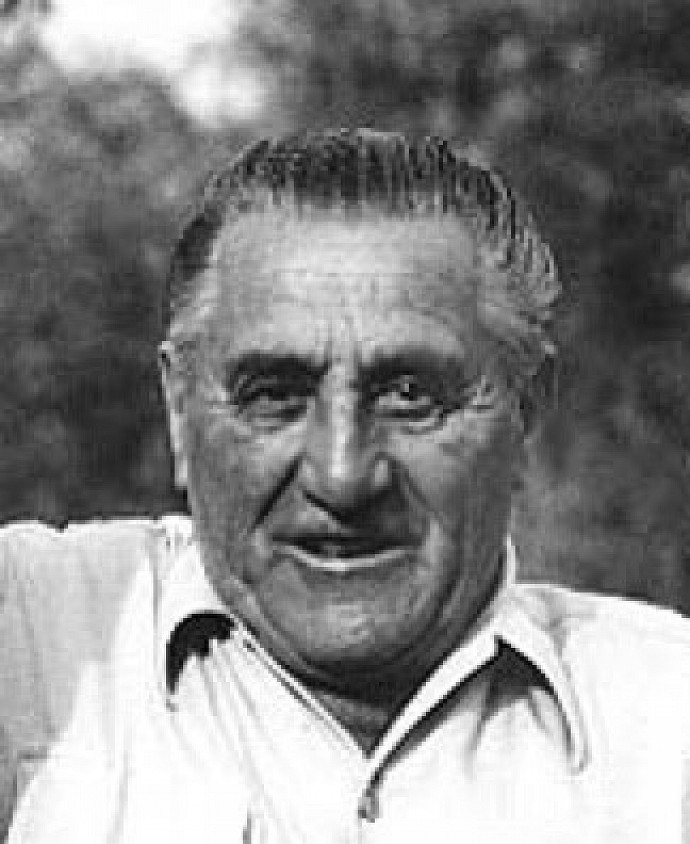
Hans Gebetsroither
What oval (elliptical) fly casting is all about? And, it's history.
Historical Profile
Author: Gunter Feuerstein
In the United States, oval casting is known as Belgian Casting. It was only by accident that the Americans started to call it that way. Despite of that, it is definitely the wrong term because this way of casting was originally created and spread throughout Europe by the late Hans Gebetsroither from Gmunden in Austria.
He created this style during his time as a river keeper and guide at the famous Gmundner Traun (River Traun below Traun Lake in Upper Austria) in the 1930’s. He had to dry and grease the silk lines of his clients every night and found it easier and faster to do it by casting them in an oval. After the World War II he began teaching this style to one of his famous clients. The Irish Dr. Briscoe asked him to teach him, because he realized that Hans Gebetsroither was doing something completely new.
Hans Gebetsroither, the simple shoemaker, river keeper and guide was a little bit ashamed because he was only used to serve the rich and well known, but now he was asked to teach them. He took the chance and within the following years he became well known throughout Europe. He created a new fly casting style.
In the next decades up to his death in 1986 thousands of people from all over the world learned from him. Famous fly fishers like Charles Ritz were among his students. A lot of people think Gebetsroither did not really know what the real advantage of his style was and he was definitely not the one to explain biomechanically why to do what and what for. He knew that his style had great advantages. He knew how to perform it from his intuition and he could tell everyone how it had to be done. Everyone admired him because of his modesty and he became kind of a legend in the Alpine countries in Europe.
A sculpture in front of the Hotel Marienbrücke in Gmunden, where he taught, still remembers this unique man. His style became the major fly casting style in the European Alps. In fact, in Europe nobody talks about a Belgian Cast. It is high time that this fly fishing term is to be replaced in the USA by Gebetsroither Style or Austrian Style as it is called in Europe to give credit to its inventor.
Why is the Gebetsroither or Austrian Style known as Belgian Style in the States?
Read the statement of Guido Vinck from Belgium, EFFA Flycasting Board member and former fly casting world champion, on how it came that the Gebetsroither Style is called Belgian Cast in the USA:
"Albert Goddart was born in the town Bouillon (south of Belgium - Ardennes) just before world war one. After world war two he became a well known caster and fished a lot of times together with Hans Gebetsroiter and Charles Ritz (so he could learn the Gebetsroither style). At that time, Goddart was one of the best flycasters in the world and was more or less sponsored by Hardy. I never met him because he died in the early sixties but met a lot of people who knew him. In the early fifties, the first international (official) casting championships (CIPS) started and the world chapionships in Brussels in 1958 was his moment of glory where he won a silver medal. During this period, he met a lot of Americans and also visited the USA. There he demonstrated the Gebetsroither style, that's why the Americans call it the Belgian Style."
The Pros of the Gebetsroither Style
After a short excursion into the history of this style I want to add some more information and give you some more reasons why in my opinion this style is that useful and important:
- The tension of the line is felt constantly (permanent line control) – no loss of control at the stops – therefore very easy to learn.
- Round movements are more harmonic than straight movements – no extreme breaks at the stops – better drift.
- Only one style for most of the situations - no change of the basic technique necessary (basic cast, roll cast, switch cast can all be performed with the same basic technique - no style switching!
- Fits perfectly to the lighter and shorter tackle that is now available everywhere.
- Pointer on top grip enables you to do a long casting stroke and to cast very accurately.
- As you cast in a 45° sideways position, you can feel safe when “self hooking” is concerned.
- Shoulder muscles are stronger - therefore shoulder joint (ball joint) is the main joint used for this technique.
Elliptic casting – only a European development?
Elliptic casting is not only but mainly a European domain. There are of course American fly casters like Lefty Kreh who recognized this technique to be very useful, too. Lefty Kreh for example had a perfect technique for saltwater fly fishing. He worked with the oval too, although the reason for using it in his casting is another one (getting under the nasty wind). Hans Gebetsroither’s main intention was to aim a high back cast because of bushes in the back similar to Charles Ritzs’ High Speed High Line technique.
The main thing that made this style possible was the change in rod length. Hans Gebetsroither simply cut all split cane rods (he was a good split cane rod builder) down to 6-7 feet. A shorter rod (and therefore lighter tackle) made it of course easier to cast elliptically.The same did late Lee Wulff in the States. If you look at some of his first fly fishing films taken in the Rocky Mountains you can see him casting nearly in the same way as Gebetsroither did (not always but in a lot of situations). The short rods (he was the first to catch salmon on dries with short single hand rods) he used made this possible. The development in the States and Europe what these two fly fishing capacities are concerned was a parallel one in another way too. The elliptic movement in combination with the use of light and short tackle favored the pointer on top grip, because it is the natural grip in the 45° sideways rod position. While Hans Gebetsroither put only the pointer on top, Lee Wulff used the pointer on top with the thumb placed besides it like Hebeisen did first in Europe.
While Hans Gebetsroither was mainly fishing for trout and grayling at his home rivers, he worked only with his oval casting style and made it popular by optimizing his teaching. Lee Wulff, on the other hand, was an “allrounder” who fished for trout, bass, tarpon, sailfish, marlin, steelhead, salmon and lots of other species. Therefore he had to use heavier tackle, too, which made it necessary to change the grip and the way of casting (his pointer was often not strong enough). The matter of fact that he used different techniques and also that he was more a fly fisherman whose aim was to fish all waters for all species than a fly casting instructor was in my opinion the reason why the oval casting technique became not that popular in the States in former times. With today’s tackle (light, change of grip form) everyone can use this technique at least for trout fishing.
It is good to see this great casting style now being spread widely or at least discussed in a more open way. Of course, there are also arguments against oval casting (e.g. waste of energy flow), but do not forget that it is a fly fishing technique and was not created for long casts at casting championships.
In fishing you often have to agree to a compromise. As soon as you cast big streamers or heavy nymphs you have to adapt to the situation. Right? The oval casting allows you to use the style for all sorts of fishing especially in fast running water. Gebetsroither used a high stop and a relatively narrow casting angle because he was not opening the wrist at all. "The rod ends at the elbow!", is one of his famous quotations. This narrow angle leads to the loading of the tip only and contributes of course to the casting of narrow loops. This was not a problem, on the contrary, as Gebetsroither was a dry fly fisher and an opponent to nymph fishing.
So, Hans Gebetsroither was loading the rod mainly by the use of his line hand and an effective double haul. Softer rods with more sensitive tips made it impossible to perform his style well as their tips were continuously overloaded and ... sometimes broke. This was the reason why Gebetsroither shortened the rods of his clients especially from the tip.