
Fly Fishing Blog
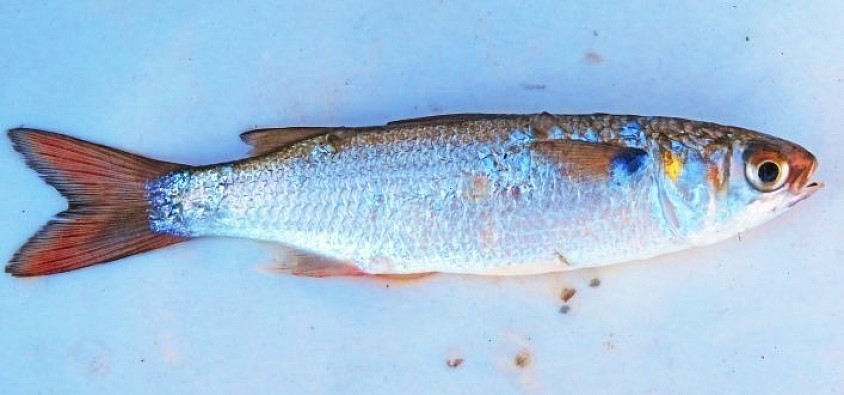
Finger Mullet: Size 3”-6”
Charleston, SC Mullet Run: Fly Fishing GuideNotes on timing, locations, patterns, retrieves, and lines
When does the annual inshore mullet run take place each year along the South Carolina coast near Charleston?
The mullet run along the Charleston-area coast typically runs from mid-September through October, sometimes stretching into early November in warmer years. It's tied to dropping water temperatures and day length, not a fixed calendar date, so timing shifts a bit year to year.
Peak activity is usually late September into October, when big schools of finger mullet move out of the marshes and inlets, drawing tarpon, redfish, jacks, and sharks in behind them.
Is it water temperature dependent?
Yes — it's primarily triggered by falling water temperatures (along with shortening daylight), not a fixed date. As water starts cooling into the mid-to-upper 70s°F and keeps dropping, mullet respond to that seasonal cue and begin their migration out of the marshes and estuaries toward open water/offshore wintering grounds.
That's why the timing isn't identical every year — a warm, slow-to-cool fall can push the run later into October, while an early cold snap can kick things off sooner and compress the whole event. Wind and tide also play a role in concentrating the schools on a given day, but the overall migration window is set by that temperature drop.
Where are the best areas to fly fish during the run?
Inlets and passes — the top choice, since migrating mullet schools have to squeeze through these on their way out:
- Breach Inlet (between Sullivan's Island and Isle of Palms)
- Dewees Inlet
- Capers Inlet
- Stono Inlet
Beachfront points and troughs — especially the surf right off the ends of the barrier islands (Sullivan's Island, Isle of Palms, Folly Beach), where you can sight-cast to busting fish working bait pushed up against the beach.
Jetties — the Charleston Harbor jetties are a classic mullet-run spot; current pushes bait past them and big predators (tarpon, jacks, sharks, bull reds) hold in the wash.
Marsh creek mouths — where tidal creeks dump into larger bodies of water; outgoing tide pulls mullet out of the marsh and gamefish wait at the mouths.
Best approach is generally to fish moving water — an outgoing tide concentrating bait at these funnel points — and look for diving birds or nervous, rippling bait balls to key in on where the action is. Early morning and late afternoon tend to be most productive.
What fly patterns work best during the run (by species)?
Tarpon:
- Large baitfish patterns matching finger mullet — Cowen's Baitfish, Tarpon Toads, EP Mullet patterns in 3-5"
- Colors: white/chartreuse, tan/white, or all-black for low light/dawn
- Bigger profile flies with some flash to mimic a fleeing mullet
Redfish (bull reds especially):
- Mullet-imitating patterns — Clouser Minnows (chartreuse/white or olive/white), EP Mullet, Half and Half
- Spoon flies work well when reds are keyed on fleeing baitfish in skinny water
- Gold/copper flash often triggers strikes in murky, churned-up water near inlets
Jack Crevalle:
- Aggressive, flashy patterns — big Clousers, Deceivers in white/chartreuse
- Jacks aren't leader-shy or picky; a fast, erratic retrieve matters more than exact pattern
Sharks (blacktip, spinner):
- Large, flashy baitfish patterns — bright orange/red or chartreuse Deceivers and Cowen's-style flies get attention in murky water
- Wire or heavy fluorocarbon tippet is a must
General rule across the board: size and silhouette matter more than exact match — you're imitating a fleeing 3-6" mullet, so profile, movement, and some flash usually out fish precise imitation. Weighted eyes help get flies in the strike zone fast when fish are blitzing through bait pods.
What kind of line strip is required when fly fishing the mullet run?
Fast, erratic strips — This is the go-to for most species during the run. Quick, short-to-medium strips (6-12 inches) with irregular pacing — vary the speed and add pauses — to imitate a mullet darting away from a predator. Jacks and tarpon especially respond to this frantic action.
Two-handed strip (stripping basket retrieve) — Many guides fish this style specifically because a mullet blitz happens fast and you need constant speed with no let-up. Stripping with both hands (line under one arm or rod tucked, alternating hand-over-hand pulls) keeps the fly moving continuously and lets you cover more speed than a standard single-strip retrieve.
Long, sweeping strips for tarpon — Once a tarpon commits and you get an eat, resist the urge to trout-set; strip-strike hard with a long pull to bury the hook, keeping the rod tip low and pointed at the fish.
Pause-and-burst for redfish — Reds often key on an injured or disoriented baitfish, so short strips with an occasional dead-stop pause can trigger a reaction strike, especially in skinnier water near creek mouths.
Across the board, keeping constant tension is critical — slack line during a mullet-run blitz means missed strikes, since everything's happening fast and fish are committing hard.
Should you use sinking or floating lines when fly fishing the mullet run?
Floating line — Best for most mullet-run scenarios especially if surface or near surface feeding is taking place.
- Sight-fishing tarpon, redfish, and jacks busting bait on or near the surface
- Beachfront and inlet situations where fish are actively feeding in the top few feet of water column
- Easier line management for the fast strip-set/hook-set needed with tarpon and jacks
Intermediate sinking line — Often the best all-around choice for the run itself.
- Gets the fly down a foot or two to stay in the strike zone when bait and predators are just below the surface (common once the initial blitz activity settles)
- Cuts through wind and chop better than floating line at jetties and inlets
- Many guides consider this the workhorse line for mullet-run conditions since fish aren't always busting on top
Full sinking / fast-sinking (Type III-VI) — Situational, mainly for:
- Deeper jetty structure or channel edges where fish are holding deeper, not actively chasing on the surface
- Sharks and bull reds hunting near the bottom in deeper cuts
General guidance on sink rate for surf: Intermediate (1-2 ips) is best for calm surf days and keeps your fly riding high in shallow water, while Type 3 (3-4 ips) is the in-between choice for moderate surf and medium-depth water — it gets your fly under the surface quickly without dragging bottom.
If you can only carry one setup, an intermediate line is the most versatile pick for the run — it handles both subsurface feeding and can still work fish that are busting near the top, without the hassle of a full floating line getting pushed around by wind and current at the inlets.
For Charleston beachfronts during the run, the Rio Premier Striper Intermediate or Outbound Short Intermediate are the most fitting picks — both handle wind and distance well, which matters when casting into surf chop at spots like Folly Beach or the Isle of Palms/Sullivan's Island fronts.
Single Hand rods: Lines for the surf
RIO Premier Striper Intermediate — Purpose-built for surf/striper-style fishing. This is a clear, slow-sinking fly line built for striped bass, with an aggressive taper that turns over big flies with ease. It's designed specifically for surfcasting and inshore work, with a luminous running line for night fishing — useful since mullet-run action can be strong at dawn/dusk.
RIO Outbound Short Intermediate — Built to cast large and heavy flies and get huge distances easily, with a short, aggressive front taper that carries large, weighted streamers and a powerful head design that loads rods deeply and quickly for fast, easy distance. A strong pick if you're throwing bulky mullet patterns and need to reach fish busting beyond the immediate wash.
RIO Elite Flats Pro — More flats-oriented but versatile, offered in four densities including Full Floating, 6ft Intermediate Stealth Tip, 15ft Intermediate Tip, and Full Intermediate options, and marketed explicitly for both flats species and heaving big baitfish patterns into the surf for stripers.
What RIO intermediate shooting head works for two hand / Spey casting setups to surf fish during the mullet run?
RIO Outbound Short Intermediate Shooting Head — Purpose-built for surf/striper-style fishing. This is a clear, slow-sinking head with an aggressive taper that turns over big flies with ease. It's designed specifically for surfcasting and inshore work.
RIO's shooting heads are based on the popular OutBound Short lines, and are designed to cast very long distances. The front loaded weight distribution quickly loads a rod, while the unique step down taper at the back allows for very long flight times and easy distance. The heads are built two sizes above the AFTM standard to correctly load modern rods - anglers do not need to step up a line size when choosing a line for their rod, as this is done in the design.
Rigging notes:
- The 30 ft head comes in 265-425 grain configurations matched to #7 through #10 wt two-handers — for stripers/redfish/small tarpon on a switch or Spey rod.
- Requires a shooting line — Consider a RIO Powerflex Ultra Shooting Line in .030 size or a 35lb GripShooter Shooting Line.
- A shock/bite tippet section up front is worthwhile given the toothy species (jacks, blues, small sharks) that show up during the run. The suggestion is to use four or five feet of replaceable 30# or 40# fluorocarbon tippet material with a non-slip loop knot to the fly.
Similar floating, intermediate, and fast sinking shooting heads are available from other fly line manufacturers such as Scientific Anglers and Airflo.